Put your audience on the hill
Summary: Story’s superpower is that it immerses your audience. The tradeoff is that it takes time, is open to interpretation, and may not be received depending on culture and context.
A material’s properties influence the types of uses to which you can put it. As we discussed in the intro, steel’s strength makes it ideal to support large structures. Gold, while also a metal, is far softer and would make a poor substitute. Yet for both social and aesthetic reasons, gold is superior to steel in decorative applications.
Or consider wood and ceramics. Wood makes a fantastic shipbuilding material. Its buoyancy and flexibility make it ideal on the water. Anyone building a boat out of bricks, on the other hand, will quickly find themselves in trouble.
Nevertheless, there are purposes for which both materials are equally well-suited. Both wood and bricks can be used to build houses. They just have different pros and cons.
Wood comes in larger unit sizes. You’d struggle to make a piece of ceramics as long as a ten foot (3m) wood beam, for example. You’d need a large kiln, and it would be difficult to regulate the temperature across that area. The clay would likely warp or shatter. Instead, you must form clay into bricks, which are far smaller.
On the other hand, while ceramics have a size disadvantage, they have the benefit of longevity. If you don’t properly treat and maintain wood, it will degrade in the elements. Boards will bleach and bend in the sun, and rot will set in wherever the boards stay damp. Bricks don’t weather nearly as quickly. Once properly fired, they can last for decades.
This shows us something interesting about materials. In some cases, more than one materials’ properties will allow them to share the same purpose. In other cases, only one material will do.
The purpose of storytelling
What’s true of steel and gold and wood and clay is true of storytelling. Its material properties make it better suited to some applications than others.
What are those applications?
Since time immemorial, people have used stories to do three things:
- Entertain
- Inform
- Influence
Story is not unique in these purposes. Other forms of communication can do this too.
As I write this now, I’m not telling you a story, but I am attempting to inform you about my mental models. I hope to influence you to consider my perspective. If I’m very fortunate, perhaps I even entertain you a little bit. (“Infotainment” is a thing, after all.)
So. If other forms of communication can entertain and inform and influence, what is it about story that makes it special? Surely, like the size advantage of wooden boards or the durability advantage of bricks, there must be something distinctive about this material, right?
Story’s unique capability
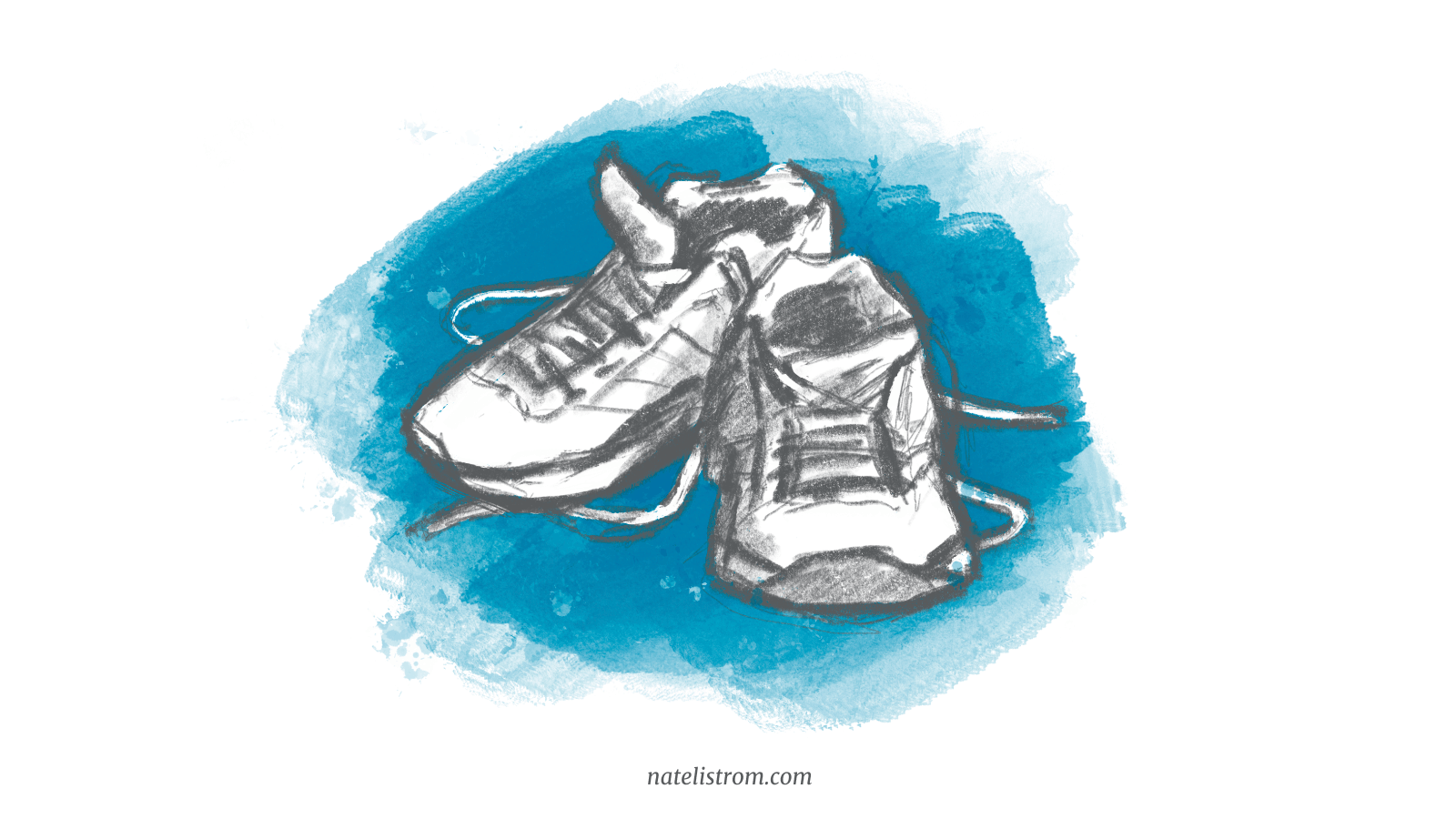
Story’s power is this: It allows an audience to inhabit information. It allows you to put ideas on like shoes and walk around in them.
It’s the difference between previewing a jogging route on Google street view versus running the route itself. Both inform you about the territory. If high enough resolution, both can give you insight about where the large houses are, whose lot is well-maintained, who drives a fancy car.
But while the map can tell you where the big hill is, it’s only in running the route that you can feel the ache in your lungs, the thirst for air, the fire in your calves, the sheer force of will you must summon to continue the climb when you feel completely spent and you’re only halfway up.
Story puts you on the hill, not above it.
And that is a profound difference.
That’s why experts in communication and marketing are so quick to proclaim the excellencies of story. Story engages. Story sticks. Story gets your message across more powerfully than plain statements. As story consultant Lisa Cron’s book title asserts, we humans are “wired for story.” (Cron)
Story’s limitations
But, not everything needs to be story. Story’s ability to wrap you inside of itself is also a liability. It has costs.
Time
It generally takes longer to say something through a story than it does to say it as a bare, raw statement. Disney’s Aladdin takes ninety minutes to tell us that you shouldn’t judge a person by what you see on the outside. It takes less than five seconds to convey the exact same message as a simple declaration.
Interpretation
Because stories communicate primarily on the level of experience rather than logic, your message is necessarily vague. If you try to control your thematic argument too precisely, your story can come across as preachy and your theme overbearing or ham-fisted. (Phillips, Location 3098) You must weave it subtly, and when you do, it becomes open to interpretation. You give up control.
That’s why journalists and preachers both will follow up their stories with an interpretation. “This is what happened, and this is what it meant.”
Receptivity
People’s receptivity to storytelling as a method of communication varies depending on culture and context.
Culture
In some cultures, people prefer to communicate through stories, especially if they need to say something indirectly.
Imagine, for example, that I want to buy a field in a rural mountain community so that I can develop it for tourism with vacation homes. Rather than coming out and saying that they don’t want me to do that, the local community leaders might tell me a story. In this story the characters, events, and outcomes all serve as stand-ins for the current situation. In this way, the community leaders can tell me what they think — maybe even communicate concerns that they expect me to address, which might make them more open to my proposal — without putting anyone on the spot.
However, I’ve experienced the exact opposite preference when working with software teams in the US. My former colleagues at Microsoft value directness. Engineers want logic. Product people want business analytics. Analogy doesn’t convince. In Western business, leaders want numbers, reasoning, impact, repeatability.
Software is interesting because it’s at the extreme end of the spectrum. The field attracts people who are motivated by logic more than emotion. The engineers I worked with were generally skeptical of stories unless there was an extremely clear tie-in. How does the story explain or add nuance to what’s already visible in the data?
Many of my fellow designers felt defeated by this. As artistic people, we intuitively appreciate craft in any form, including story. When the marketing experts tell us that stories are the most effective way to influence others, we gobble up that message. We get excited. Yes!
Then we try it. Inevitably, we’re disappointed. We tell a story, thinking it’s a brilliant argument. Our colleagues feel we’ve wasted their time.
Context
Context also matters. While in the conference room, nobody wants War and Peace, in courts of law, people still rely on eyewitness testimony. History, similarly, depends on testimony. And testimony is story.
So. There are contexts in which stories are well received in Western culture — even beyond entertainment and advertising. But the reality is complicated. In some cases, you must look to other tools to get your point across.
Respect constraints
Just as you wouldn’t use ceramics to build a barquentine, there are purposes for which a story is a poor fit. You need time to tell a story. Stories leave room for interpretation. And, audience receptivity depends on culture and context.
But as long as you respect those constraints, story can be a powerful way to entertain and inform and influence. It’s special because it produces something that no other form of communication can do quite as effectively: immersion.
You put your audience on the hill.
In the next note, we’ll explore how story’s properties affect how your audience receives your story — what it looks like and feels like when they “pick it up and heft it in their hands” — their experience.
Until then: onward!
Rate this note
Read this next
Clear, believable, engaging, affecting, meaningful
Stories communicate through experience, and the quality of that experience depends on five key factors.
Level-up your storytelling
Understand how stories work. Spend less time wrangling your stories into shape and more time writing them.